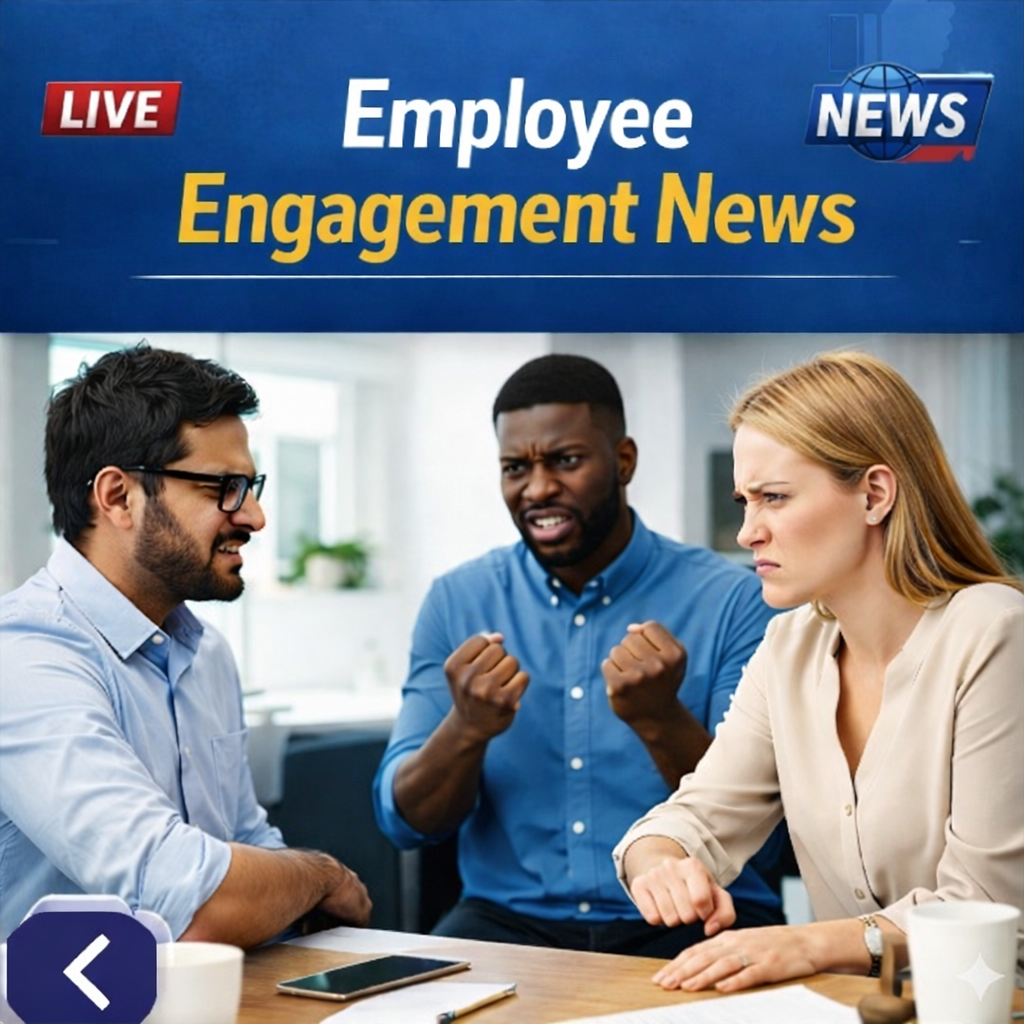
Work doesn’t feel the same anymore. Teams are hybrid. Meetings are half online and half in rooms with bad microphones. People care more about flexibility than fancy office chairs. That’s why employee engagement news today keeps showing up everywhere—companies are still figuring out how to keep employees motivated without burning them out.
And honestly, employees have changed too. They expect communication, growth, and a bit of understanding when life gets chaotic. Recent employee engagement survey news today reports a simple truth: people stay where they feel respected. Sounds obvious… but many companies are only now catching up. Some organizations are trying new work models. Others are just trying to fix communication gaps. Either way, engagement isn’t just an HR topic anymore—it’s part of everyday business survival.
It wasn’t only a matter of where people sit that was changed by remote work. It changed expectations. Employees expect honest leadership, transparent communication, and the conviction that someone is actually listening. Managers, meanwhile, are finding out that engagement is not about motivational posters—it’s about trust that takes time and will be earned.
Trends that are Determining the news of Employee Engagement Today
Much of the employee engagement news today deals with emotional well-being and daily work experiences. People now speak openly about burnout—once a thing that was hidden behind formal smiles and long hours.
And flexible work options keep getting attention. Teams that provide hybrid schedules or flexible hours tend to report higher morale—but only if communication remains robust. Flexibility can easily become confusion in the absence of clarity.
Another shift? Recognition is changing to something less formal. Instead of annual awards, some teams concentrate on weekly shoutouts or a small thank-you message. It’s easy at first sight, maybe even obvious; yet those small seconds can change how employees feel about their contributions to the company.
And there’s increasing talk about purpose. Workers want to know that their tasks relate to something larger. Engagement tends to ramp up organically when leadership articulates the “why.”
What is Employee Engagement ?
Employee engagement is the emotional connection individuals have with their work and workplace. It’s not simply about showing up and getting things done but about if someone cares about the outcomes and has a stake in the work.
Engagement is not a single idea. It is impacted by leadership style, team culture, opportunities to grow, and patterns of communication, as well as how respected employees feel on an ordinary Tuesday afternoon. If communication style or expectations are poor or changing constantly, there still is the perception that someone is doing just their part in their job but is disconnected.
Today’s most advanced employee engagement news today often points out how engagement directly correlates with retention and performance. When employees feel heard and valued, they’re more likely to stay and collaborate longer. When they don’t, productivity silently disappears—not every day but over time.
Companies do chase engagement with splashy initiatives. But in many cases, however, it is consistently built by habit: honest feedback, a realistic workload, and leaders who listen.
What is an Employee Engagement Survey?
An employee engagement survey is essentially a formal method for organizations to get to know how their individuals feel. The questions also cover trust in leadership, work-life balance, clear communication, and job satisfaction.
Old-school surveys used to occur once a year—the long forms, the complicated reporting, and silence. Now many in the workplace prefer a short pulse survey. Those brief touch-ins, these rapid-fire check-ins, tell you how employees feel over time as opposed to one long snapshot on a single annual overview.
Recent updates from recent announcements on employee engagement survey news today show that when those surveys feel conversational rather than clinical, employees respond better. Basic language, anonymous answers, and visible follow-up actions count for more than fancy dashboards.
But here is an uncomfortable insight: the surveys themselves do not fix anything. Trust is lost if employees are providing feedback and nothing changes. The true value comes when you listen and respond.
How to Measure Employee Engagement?
Measuring engagement isn’t always straightforward—you’re basically trying to understand how people feel, and that’s not something you can fully capture with numbers alone. So most organizations look at small signals over time to get a clearer picture of what’s actually happening inside their teams. Survey results are merely one piece of the puzzle, especially when supplemented with findings from employee engagement survey news today reports that chart broader workplace trends.
Patterns spread across time often tell even more than a single rating. Sometimes the clues show up in everyday work patterns. A sudden dip in productivity, more people calling in sick, or deadlines quietly slipping can point to something deeper than just a busy week—often it’s a sign that motivation or morale isn’t where it used to be.
Retention data matters too. Frequent resignations often signal dissatisfaction long before formal complaints appear. And here is the measurement tool, the underestimated tool—the conversation. Mostly, one-on-one meetings between managers and employees are often sufficient to reveal concerns faster than spreadsheets ever can.
Some companies now mix surveys, performance trends, and daily communication to understand what’s really happening. The goal isn’t perfect scores—just better awareness and more honest conversations.
How to Increase Employee Engagement?
Engagement usually doesn’t improve because of one big program. It’s the small, consistent actions that slowly make people feel more connected to their work. Managers who sit quietly without interrupting create great trust.
When expectations are clear, employees can begin to feel confident instead of anxious. Honest communication—even when news isn’t great—makes employees feel respected. And recognition doesn’t need big budgets; sometimes a simple thank-you is enough. Simply recognizing effort can transform someone’s entire week.
Flexible policies matter, yes, but only in the context of clear expectations: letting your employees know what they should do. Technology plays a role too. Some firms leverage AI solutions to perform analysis of feedback trends more quickly, and that’s a common thread, which appears in the coverage of employee engagement and retention throughout today’s social media discussions.
But most experts say the most important thing is human connection, more than whatever platform exists. Many younger workers in the workforce who arrive today, too, will expect transparency and purpose. They want to see how their efforts contribute to something bigger than their work today. The companies that explain that link typically have relatively more loyalty to their people.
The main point of employee engagement survey news today’s coverage is perhaps even the most important: improvement happens gradually. Small-to-medium changes—like switching up meeting styles, having clearer conversations, or doing quick genuine check-ins—often matter more than big flashy initiatives that look good but don’t last.
Conclusion
Employee engagement isn’t a corporate buzzword anymore. It’s part of how modern workplaces survive constant change. Insights from employee engagement news today and trends highlighted in employee engagement survey news today show that organizations are shifting toward more human-focused strategies.
Understanding engagement, listening through surveys, measuring feedback properly, and actually acting on what employees say all contribute to stronger teams. Engagement grows slowly—through communication, trust, and small everyday actions.
Every organization has its own tempo. But the ones that remain curious, listen attentively, and evolve slowly make workplaces where people really want to stay—and contribute.
FAQs
Q. Why is employee engagement such a huge topic today?
A. Because work is not the same now. Changes like remote setups, different communication styles, and a stronger focus on well-being have really pushed companies to rethink how they should support people and keep trust alive.
Q. How frequently should a company do engagement surveys?
A. Many companies use very short pulse surveys rather than one long annual poll every few months. Frequent check-ins usually help monitor progress and act swiftly on concerns.
Q. How to increase engagement most quickly?
A. Starting the honest conversations and regular feedback. Small recognition moments, clear expectations, and real one-on-one interactions usually do more than complicated engagement programs ever will.