We all know that feeling when, in our car, the “check engine” light goes on. We don’t know exactly what is wrong yet, but we still feel that it will cost us a lot of money. That’s just what it feels like when the mention of “recession” begins to swirl around.
One day, everything goes smoothly, and the next, the news is grim, eggs cost a fortune, and your boss is stressed. It’s a word that comes with many plumes of baggage. But I think to really stop being afraid of the monster beneath the bed, the best way is to turn on the lights. For real, let’s see what a recession is without the boring economics lecture and what that does for us.
What is a recession?
Cut out the fancy charts, and a recession is really just the economy hitting the brakes. The economy is like a garden. It’s usually spring or summer—things are thriving, businesses are hiring, and money is moving. A recession is winter. Growth cools, everything freezes up, and we must rely on what we’ve kept in store.
Technically, the so-called “official” scorekeepers (the NBER) look for a significant drop in activity that lasts more than a few months. But winter doesn’t need an official announcement to know it’s coming. You sense trouble when “now hiring” signs disappear and friends start worrying about their next paycheck.
What happens in a recession?
When the economy contracts this cold, the symptoms quickly spread. It usually starts with fear. Businesses get spooked. They check out their numbers and see, “Maybe we shouldn’t build that new office now,” or “Let’s wait to hire new people.”
This caution sets off a domino effect. When a car company starts making fewer cars, they stop buying steel. The steel mill slows down, and the truckers who take the steel work less. And then all of a sudden all in that chain have less money to spend at the grocery store or the movies. It’s a cycle where everyone tightens their belt at the same time, which unfortunately perpetuates the slowdown.
Impact of the recession on households
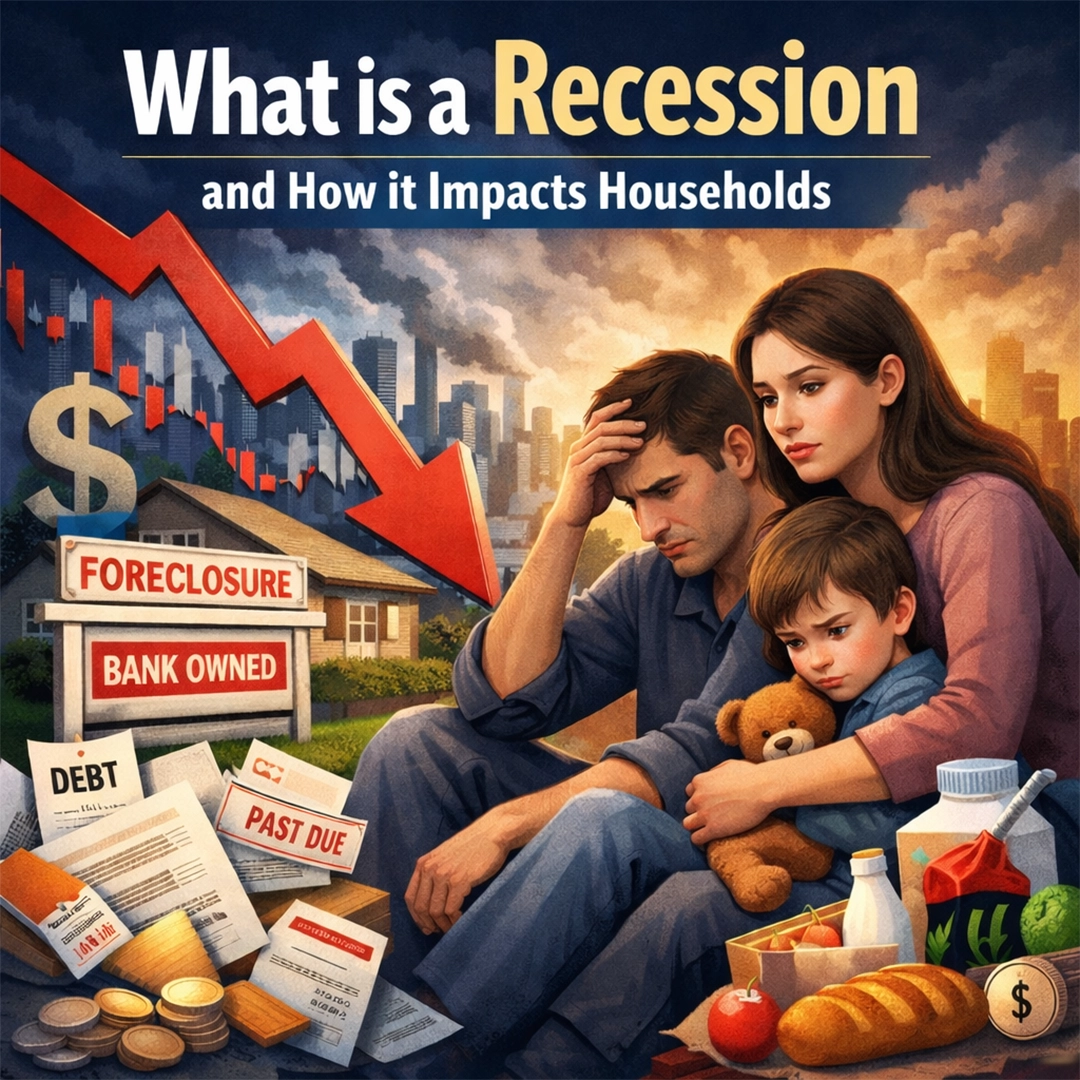
The big picture is one thing, but the impact of the recession on households is where it gets to the reality. It’s not about “market trends” anymore, but it is about your kitchen table. The first thing that you probably feel before you’re all right there is a squeeze. Even if you stay employed, your paycheck may not grow. No bonuses, no raises, no overtime.
But where your income remains flat, life doesn’t become any cheaper. This compels you to make difficult decisions. It isn’t budgeting so much as it is triage. Will you pick the credit card or repair that leaking roof? Will you adhere to the grocery list or treat the kids to pizza? The wiggle room evaporates. That smidgen of surplus money you once had for fun—or for emergencies—disappears.
The margin for error in a monthly budget disappears. That “fun money,” or the savings you were putting aside for a vacation, often gets diverted to cover the essentials like electricity and rent. Asset values also tend to take a hit. If you own a home, you might see its value dip. If you have a retirement fund like a 401(k), watching the balance drop can be stomach-churning. It creates a feeling of being poorer, known by economists as the “wealth effect,” which psychologically stops people from spending even if they technically have the cash.
How do recessions affect people?
Beyond the bank account, this kind of thing can mess with your head. The mental toll is heavy. People live with that nagging, constant, never-ending question of “Is my job safe?” It’s that constant background noise that disrupts your sleep and shortens your patience with the people you love the most. It becomes a constant background noise that disrupts your sleep and shortens your patience with the people you care about.
Sometimes it feels like you’re working hard but not reaching anywhere. For recent graduates, it can be a harsh wakeup call. They’ve done all the right things—gotten the degree, done the internships—and graduated into a world that says, “Sorry, we’re closed.” For older people, it is the danger of seeing their retirement fund shrink just when they were ready to use it. It really seems like the goalposts have been pushed.
What happens to families during a recession?
Family life is hard, but financial strain adds on the pressure. At home, the dynamics shift when money is tight. It causes us to circle the wagons, and we have to make changes we might disagree with.
- The “No” Conversation: Parents have to start saying “no” a whole lot more. No to the summer camp, no to the new sneakers, and no to the streaming services. Heartbreaking to deny your kids things if it is a must.
- Crowded Houses: So many families bundled up. Adult kids move in because rent is way too high, or grandparents move in for financial reasons. It’s nice for bonding, but let’s be honest—it’s tough on privacy and patience.
- Rethinking dreams: replaces the “best” option with the “smart” option. Perhaps the goal of a private university becomes a community college. It’s a pragmatic approach, but it can seem a matter of diminished status or opportunity.
How to prepare for a recession
You can’t just prevent winter from coming. You just need to grab a coat. Preparation is the only simple remedy for the anxiety.
Sharpen your tools: Job security does not exist; employability does. Learn a new skill, take a free online course, or take a side hustle. The more things that you can do, the harder it is for the world to knock you down.
Hoard some cash: In a recession, cash is your friend. Do your best to stash away whatever you can. Even if you can’t save three months, $500 cash in the bank can save you from disaster if the car breaks down.
Kill the bad debt: Credit card debt can be dangerous when hard times come. The interest eats you alive. Attack those balances now while you’ve got a paycheck. Removing that monthly payment from your back offers you breathing room.
Conclusion
Look, recessions are rough. There is no sugarcoating it. They test our patience, our relationships, and our bank accounts. But one very important thing history lets us learn: they end. Every downturn in history has been greeted with a recovery. If you keep your calm and your belt tight, you can deal with the storm. Focus on what you can control, don’t be very harsh on yourself, and never forget spring always comes back.
Frequently Asked Questions
1. How long does this typically take?
It changes, but more often than not, it is under a year. It averages 10 or 11 months. The recovery—getting jobs and wages back up—may take a little longer, but the “falling” piece tends to be relatively brief.
2. Is my money safe in the bank?
Yes. As long as your bank is FDIC insured (almost all are), the government guarantees your money up to $250,000. And even if the bank goes bankrupt, your savings are safe.
3. Should I sell my stocks?
Deep breath—probably not. Selling when the market is down just means losing money is permanent. The market always rebounds; historically, it always returns. If you don’t need cash today, waiting for that cash is typically the best course of action.